Choosing a Blood Sugar Supplement: An 11-Point Buyer's Checklist
Written by the Cinna Harmony editorial team
Last updated · Who reviewed this page · How we write and review
Start with the ADA's view: supplements are not recommended for blood sugar benefits. If you still want one, check that every key ingredient has an amount near the dose used in studies, that claims say supports rather than lowers, and that a lab report matches your lot. Cinna Harmony passes on seller details and fails on doses.
Do blood sugar supplements actually work?
Most blood sugar supplements have weak or mixed evidence. The American Diabetes Association does not recommend vitamins, minerals such as chromium, or herbs such as cinnamon for blood sugar benefits (ADA, 2026).
NCCIH says most supplements lack proof for diabetes and warns against replacing treatment with them (NCCIH, 2018).
A few single ingredients did show small effects. Pooled chromium trials lowered A1C by about 0.55 percentage points (Suksomboon et al., 2014), yet other experts still advised against chromium for diabetes (Landman et al., 2014). Ginseng nudged fasting sugar down slightly with no A1C change (Shishtar et al., 2014).
The Cinna Harmony buyer's checklist for any blood sugar supplement
Run any bottle through these eleven checks before you buy. A product that fails several asks for trust instead of proof.
Tick each line as you go. The counter shows how many the product passes.
Before you buy, check: 0 of 11 checked
How to compare a label dose with research doses
Set the amount on the label beside the amount used in human trials. You need only the label and one fact sheet.
The same steps work for drops, capsules and gummies.
- 1
Find the amount per serving
Read the Supplement Facts panel and note the serving size and each ingredient amount.
- 2
Count your daily servings
Multiply by the servings the label suggests. One or two 1 ml servings doubles the amount at the top end.
- 3
Look up the research dose
Find the daily dose used in human trials, such as 200-1,000 mcg for chromium.
- 4
Compare the two
Divide the label amount by the low end of the research range to see what share you would get.
- 5
Check what was measured
Note whether the trials tracked blood sugar or A1C, and in whom.
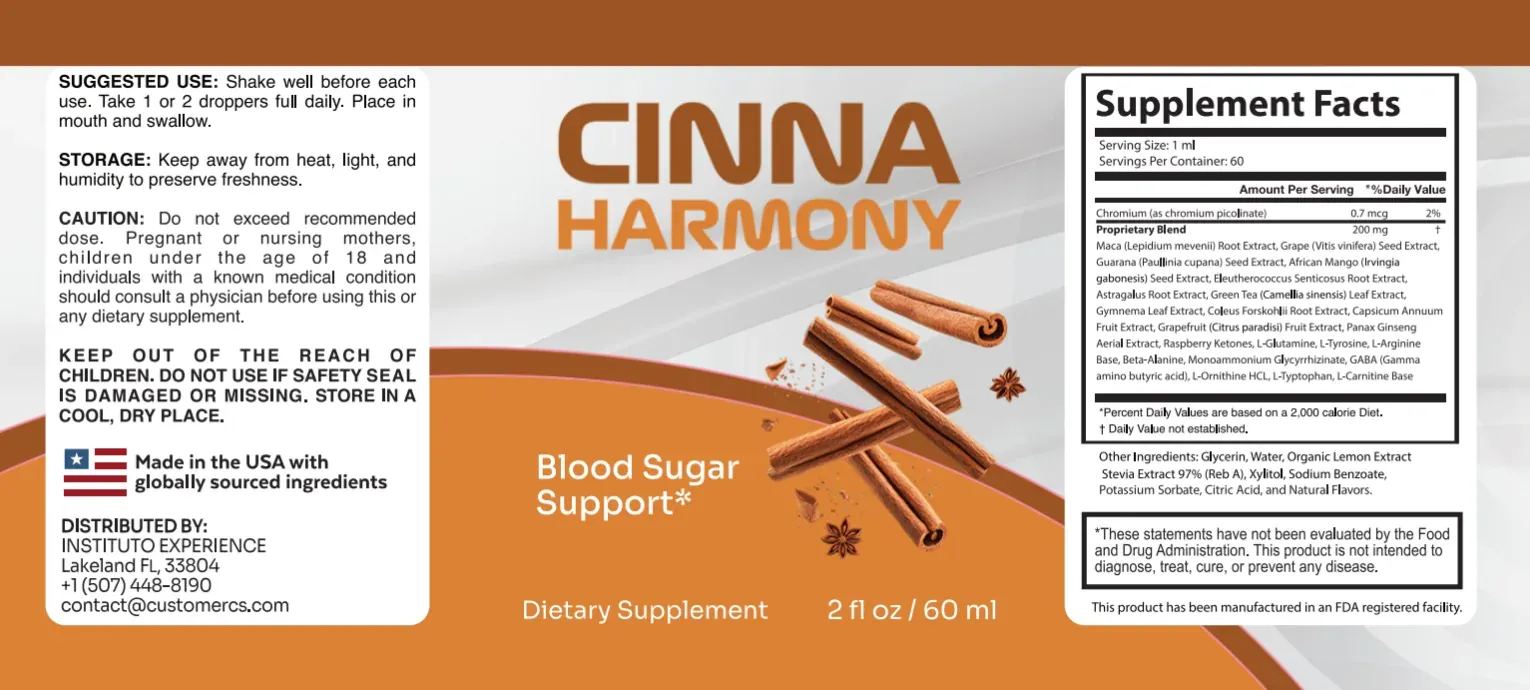
Here is the math on Cinna Harmony. The label lists 0.7 mcg of chromium per 1 ml, or 1.4 mcg at 2 ml. Trials used 200-1,000 mcg a day, so the bottle gives about 1/300 to 1/1,400 of a trial dose (NIH ODS, 2022).
Are proprietary blends bad? What the Cinna Harmony label shows
A proprietary blend is not unsafe by itself, but it hides how much of each ingredient you get. Without single amounts, you cannot compare the product with any study.
The Cinna Harmony blend weighs 200 mg and holds 22 ingredients. If it were split evenly, each would get about 9 mg per ml. The real split is not printed.
| Ingredient | Dose used in a study | Share in the Cinna Harmony blend |
|---|---|---|
| Gymnema | 600 mg a day (Zuniga et al., 2017) | Not printed; the whole blend is 200 mg |
| African mango | 150 mg twice a day, one branded extract (Ngondi et al., 2009) | Not printed |
| Maca | 1.5-3.5 g a day (Shin et al., 2010) | Not printed |
| Panax ginseng | About 0.1-8 g a day (Shishtar et al., 2014) | Not printed; aerial parts |
Chromium vs cinnamon for blood sugar: which is better?
Neither chromium nor cinnamon is recommended by the ADA for blood sugar (ADA, 2026). Chromium has a little more trial data, but the effect is small and unclear.
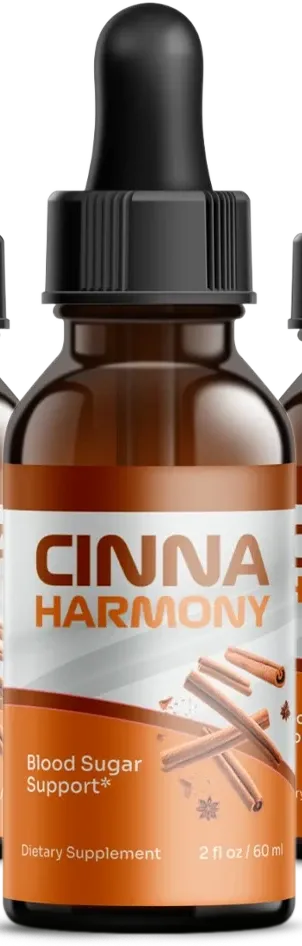
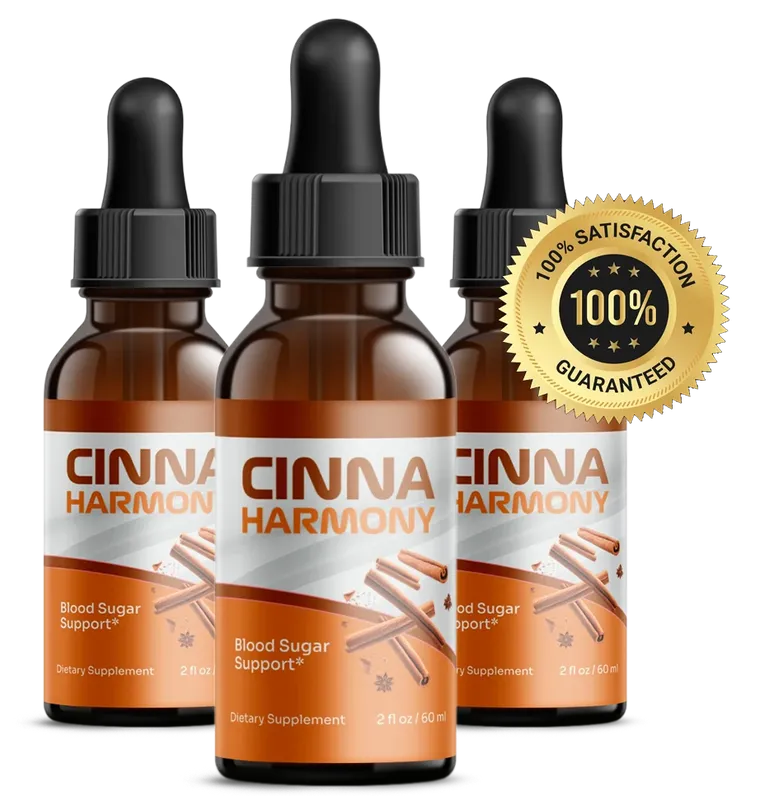
Cinnamon gets attention because of its name on many labels. Cinna Harmony carries it in the name and the artwork, yet cinnamon is not on its ingredient list.
| Chromium | Cinnamon | |
|---|---|---|
| What reviews found | Small, unclear drop in blood sugar and A1C in diabetes (NIH ODS, 2022) | Unclear whether it helps diabetes (NCCIH, 2024) |
| Main caution | May add to insulin or diabetes pills | Some cassia products are high in coumarin |
| On the Cinna Harmony label | 0.7 mcg, 2% DV | Not listed |
Which supplement ingredients interact with diabetes medicine?
Ingredients that may lower blood sugar can add to insulin or diabetes pills. Gymnema, ginseng and chromium are the main ones to raise with your doctor.
Others matter for blood pressure or other drugs. The table lists ingredients found in many blood sugar drops, Cinna Harmony included.
| Ingredient | Why it matters | Source |
|---|---|---|
| Gymnema, Panax ginseng, chromium | May lower blood sugar and add to diabetes drugs | (LiverTox (NIDDK), 2024) (NCCIH, 2025) |
| L-arginine | Might lower blood pressure and blood sugar | (Mayo Clinic, 2026) |
| Licorice compound | Glycyrrhizin can raise blood pressure and lower potassium | (NCCIH, 2025) |
| Eleuthero | May raise digoxin side effects | (MSKCC, 2022) |
| Grapefruit extract | Ask a pharmacist if your medicine has a grapefruit warning; the FDA warning covers juice | (FDA, 2021) |
What does third-party tested mean on a supplement?
Third-party tested means an independent lab, not the seller, checked a batch and wrote a report. A real report names the lab, the lot number and what was measured.
The FDA does not approve supplements before they are sold (FDA, 2022), and makers are first in line for safety (FDA, 2026). An “FDA registered facility” describes the factory, not the product (FDA, 2024).
An outside lab you can look up, not the brand itself.
The report's lot number matches the one on your bottle.
Identity, amounts and contaminants, with results.
For Cinna Harmony, no independent lab report has been published. The lot CH-26/GO-2905 and CoA CH-2905-26-GO references are draft labels. The testing and quality page has the details.
Red flags for fake blood sugar supplement ads
The biggest red flag is any promise to lower A1C or replace medicine. The FTC says health claims need solid human evidence on the same dose and formula (FTC, 2022).
Fake and paid reviews are also banned under a 2024 FTC rule (FTC, 2024). Watch for these signs:
- “Lowers blood sugar,” “reverses diabetes” or “throw away your metformin”
- “FDA approved” on a dietary supplement
- A famous doctor or celebrity story you cannot confirm anywhere else
- Review articles on news-style sites that end in a buy button
- The same formula sold under several brand names
- Countdown timers and huge struck-out prices
The hype and fake reviews post walks through real examples.
Cinna Harmony scored against the buyer's checklist
Cinna Harmony passes on seller details and claim wording, and fails on doses and test reports. Here is each check, scored plainly.
Score any rival product the same way.
| Check | Cinna Harmony | Result |
|---|---|---|
| Amount for every key ingredient | Only chromium has one; 22 share a blend | Fail |
| Doses near research | Chromium about 1/300 of the lowest trial dose | Fail |
| Claim wording | “Blood Sugar Support*” with the FDA disclaimer | Pass |
| Name matches contents | No cinnamon on the label | Fail |
| Named seller and returns address | Order support +1 (302) 200-3480; returns in New York | Pass |
| Refund terms in writing | 60 days from purchase; buyer pays return shipping | Pass |
| Lab report for your lot | Draft lot and CoA labels only | Fail |
| Study of the finished product | None published | Fail |
The Cinna Harmony ingredients page explains each blend ingredient in more depth.
Should you tell your doctor before trying Cinna Harmony or any rival?
Yes, always. Supplements can change how medicines work, and your doctor cannot account for one they do not know about.
Bring the bottle or a photo of the label, and ask whether any ingredient clashes with your medicines and how to watch for low blood sugar.
Choosing a blood sugar supplement: common questions
Questions people type into Google and Bing, answered from the label and the sources on this page.
What is the best supplement for blood sugar?
No supplement has been proven to control blood sugar, so no honest list can crown one. The ADA does not recommend supplements for blood sugar benefits (ADA, 2026).
Do blood sugar supplements actually work?
Most have weak or mixed evidence. A few single ingredients showed small effects in trials, usually at doses far above what multi-ingredient drops contain.
What does the ADA say about supplements for diabetes?
Its 2026 Standards of Care say vitamins, minerals such as chromium, and herbs or spices such as cinnamon are not recommended for blood sugar benefits.
What should I look for on a supplement label?
Look for an amount beside every key ingredient, claims that say “supports” rather than “lowers,” a named distributor and a lot number.
Are proprietary blends bad?
Not always unsafe, but they hide how much of each ingredient you get. That makes it impossible to compare the product with any study.
Is chromium or cinnamon better for blood sugar?
Neither is recommended by the ADA. Chromium showed a small, unclear effect in diabetes trials (NIH ODS, 2022), and NCCIH calls cinnamon's benefit unclear (NCCIH, 2024).
Which supplements interact with diabetes medicine?
Gymnema, ginseng and chromium may add to insulin or diabetes pills and push blood sugar too low. Ask your doctor before adding any of them.
What does third-party tested mean?
It means an independent lab, not the seller, tested a batch and wrote a report. A real report names the lab, the lot and what was measured.
Red flags for fake supplement ads?
Promises to lower A1C or replace medicine, “FDA approved” wording, celebrity or doctor stories you cannot confirm, and review sites that read like ads.
Should I tell my doctor I take supplements?
Yes. Supplements can change how medicines work and can affect lab results. Bring the bottle or a photo of the label to your visit.