Cinna Harmony Guides: Blood Sugar Basics and Supplement Buying
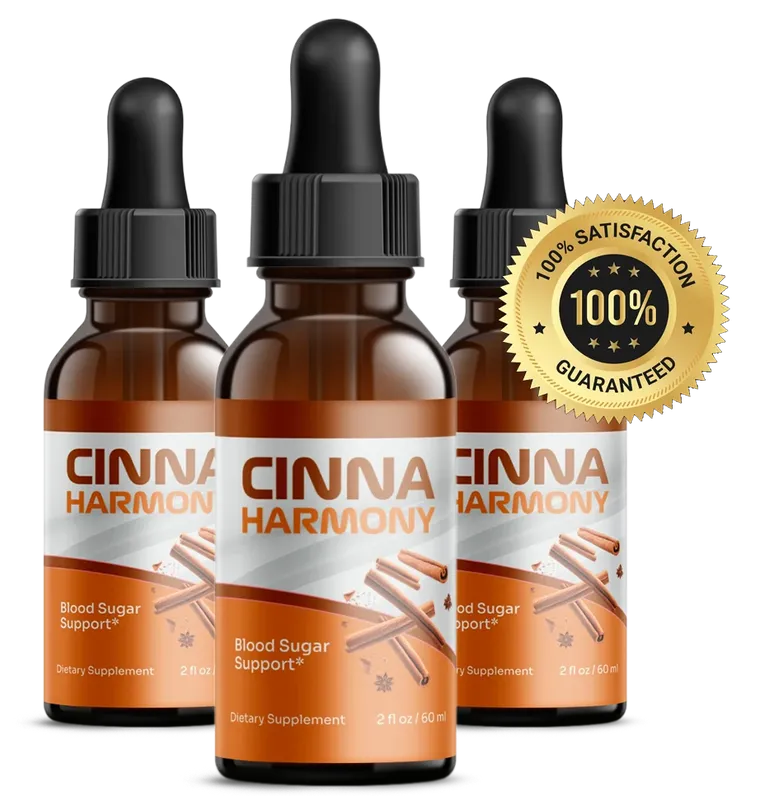
Written by the Cinna Harmony editorial team
Last updated · Who reviewed this page · How we write and review
The Cinna Harmony guides cover two topics: blood sugar basics, from normal ranges to A1C and prediabetes, and a buyer's checklist for choosing a blood sugar supplement. Three blog posts explain the missing cinnamon, the doses studies used and how to spot fake reviews. A glossary defines eleven label terms, from %DV to proprietary blend.
Cinna Harmony guides: two in-depth reads
The Cinna Harmony guides explain blood sugar basics and how to choose a supplement. Both are free and written at an everyday reading level.
Start with the habits guide, then use the checklist if you still want a supplement. Each card opens the full guide.
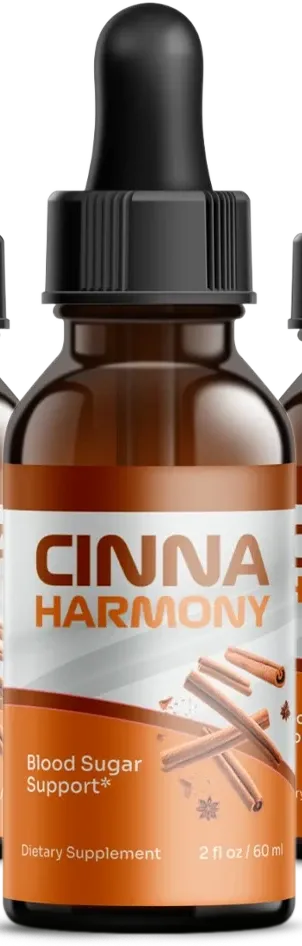
Blood Sugar Guide: Normal Ranges, A1C and Daily Habits
Normal levels, A1C versus fasting tests, prediabetes, signs of high and low blood sugar, and when to see a doctor.
Choosing a Blood Sugar Supplement: A Buyer's Checklist
What the ADA says, how to read a label, proprietary blends, drug interactions and red flags, with Cinna Harmony checked honestly.
Cinna Harmony blog: cinnamon, study doses and fake reviews
The Cinna Harmony blog takes one question at a time. Three posts cover the topics readers ask about most.
Every post links its sources, so you can open the studies and fact sheets yourself.
Is There Cinnamon in Cinna Harmony?
What the drops really contain, why the name misleads, and what cinnamon research shows.
Gymnema, Chromium and African Mango Doses
The amounts studies used, set beside a 200 mg blend shared by 22 ingredients.
How to Spot Hype and Fake Reviews
Paid press releases, the FTC fake review rule and the sales-page red flags worth knowing.
All posts are listed on the blog page.
Which Cinna Harmony guide fits your question?
Match your question to a read below. Most people need the blood sugar guide first and the checklist second.
- Want to know what normal blood sugar looks like? Read the blood sugar guide.
- Comparing supplement labels? Use the buyer’s checklist.
- Surprised the drops have no cinnamon? Read the cinnamon post.
- Wondering if 0.7 mcg of chromium is enough? Read the study doses post.
- Unsure whether a review site is real? Read the hype and fake reviews post.
Cinna Harmony glossary: label terms in plain English
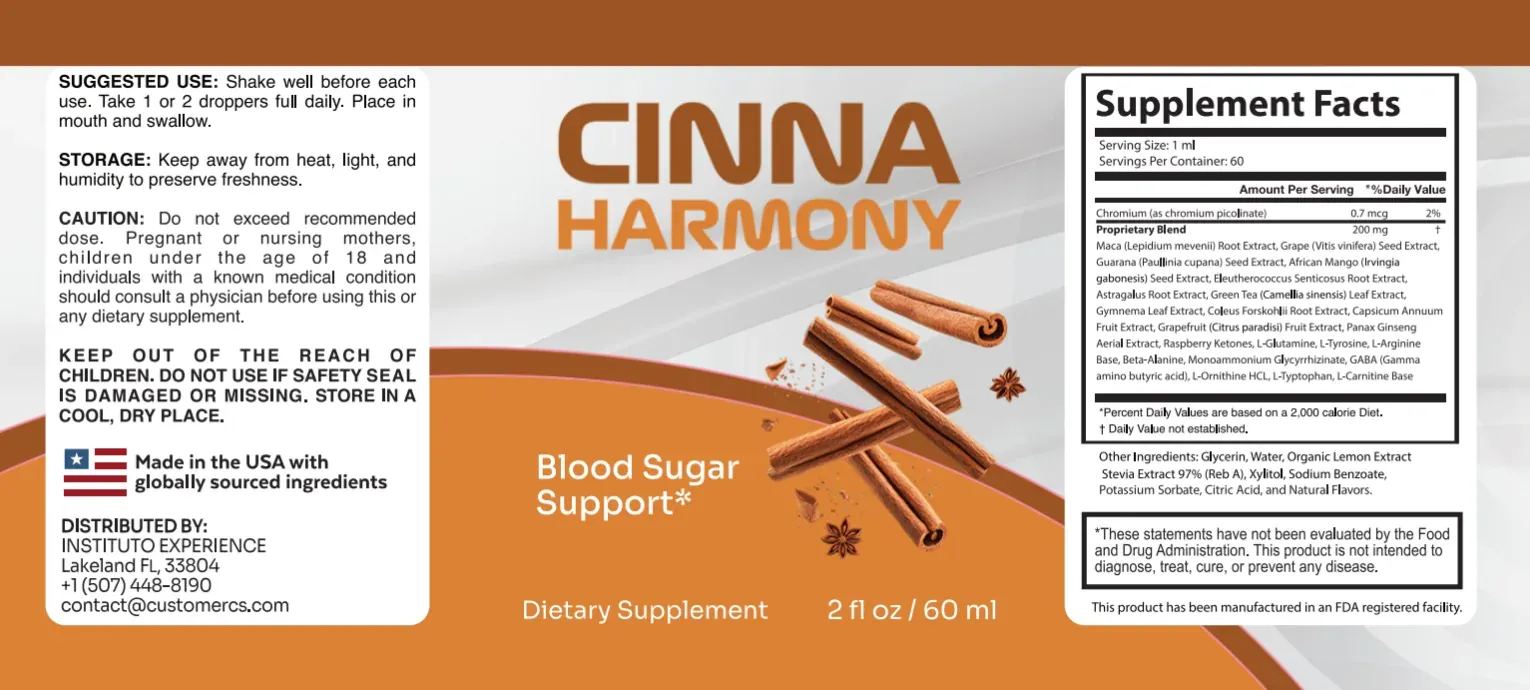
The Cinna Harmony glossary explains eleven terms you will meet on blood sugar supplement labels. The right column shows where each one appears on the Cinna Harmony bottle.
Research figures in the guides come from linked sources, such as the NIH chromium fact sheet (NIH ODS, 2022) and the FDA page on structure/function claims (FDA, 2024).
| Term | What it means | On the Cinna Harmony label |
|---|---|---|
| Supplement Facts panel | The box that lists serving size, each ingredient and its amount. | Right-hand panel of the label |
| Serving size | The amount the label counts as one serving. | 1 ml; 60 servings per bottle |
| Dropper full | One fill of the bottle's dropper. Its volume varies by dropper. | 1 or 2 a day; volume not printed |
| %DV | Percent Daily Value: the share of a daily reference amount in one serving. | Chromium 2% |
| Dagger (†) | A mark that means no Daily Value has been set. | Beside the 200 mg blend |
| Proprietary blend | Several ingredients listed under one total weight, with single amounts hidden. | 200 mg shared by 22 ingredients |
| Chromium picolinate | A form of the trace mineral chromium bound to picolinic acid. | 0.7 mcg per serving |
| Monoammonium glycyrrhizinate | A sweet compound made from licorice root. | In the blend; amount not printed |
| Structure/function claim | A claim about supporting a body function, never treating a disease. | “Blood Sugar Support*” |
| FDA registered facility | A factory listed with the FDA. It is not product approval. | Printed on the label |
| Lot number and CoA | A batch code, and a lab report for that batch. | CH-26/GO-2905 and CH-2905-26-GO, draft labels only |
How to read a blood sugar supplement label like the Cinna Harmony desk
The Cinna Harmony desk reads every label in the same four steps. You can use them on any bottle, in a store or online.
- 1
Find the serving
Note the serving size and how many servings the bottle holds. For drops, check whether the dropper volume is printed.
- 2
Write down each amount
List every mg and mcg. Mark any blend that hides single amounts.
- 3
Compare with research
Look up the daily dose used in human studies for each key ingredient.
- 4
Scan the claims
“Supports” is normal label wording. “Lowers blood sugar” or “replaces medicine” is a red flag.
How the Cinna Harmony guides use research
The Cinna Harmony guides lean on government fact sheets, medical society standards and peer-reviewed reviews. Each research line names the dose and links the source.
The American Diabetes Association does not recommend vitamins, minerals such as chromium, or herbs such as cinnamon for blood sugar benefits (ADA, 2026). The guides say so plainly, even though Cinna Harmony is a blood sugar supplement.
The full rules are in the editorial policy.
What the Cinna Harmony guides found about its label
The Cinna Harmony guides set each label amount beside the doses used in human studies. The gap is large where it can be measured at all.
That does not make the drops unsafe. It means the research cannot be borrowed to predict a result from this bottle.
- Chromium: 0.7 mcg, while diabetes trials used 200-1,000 mcg a day (Suksomboon et al., 2014)
- Gymnema: share not printed; one trial used 600 mg a day, three times the whole blend (Zuniga et al., 2017)
- African mango: share not printed; trials used one branded extract and were judged poor quality (Onakpoya et al., 2013)
- Maca: share not printed; studies used 1.5-3.5 g a day, for sexual function (Shin et al., 2010)
- Cinnamon: not on the label at all
Who writes and checks the Cinna Harmony guides?
The Cinna Harmony editorial team writes every guide and post. It works from the label, linked studies and NIH, NCCIH and FDA pages.
Each guide is medically reviewed by Dr. Andrea Hayes for accuracy against the label and the cited sources. This is general information, not personal medical advice.
How to use the Cinna Harmony guides at your next checkup
The Cinna Harmony guides work best as a list of questions for your doctor or pharmacist. Bring the bottle, or a photo of its label, and ask about the points below.
Tick each one as you go. The counter shows how many you have covered.
Questions for your next appointment: 0 of 6 checked
What the Cinna Harmony guides will not tell you
The Cinna Harmony guides stick to what the sources support. A few things never appear, however often people search for them.
- That any drops lower blood sugar or A1C
- That a supplement can replace insulin, metformin or other medicine
- A number of pounds you will lose
- A results timeline the seller never published
Questions about the Cinna Harmony guides
Questions people type into Google and Bing, answered from the label and the sources on this page.
Are the Cinna Harmony guides free?
Yes. Every guide and blog post is free to read. There is no sign-up box, no email wall and no paywall.
Do the Cinna Harmony guides replace a doctor's advice?
No. They explain public research in plain words. Questions about your own blood sugar, test results or medicines belong with your doctor.
Which Cinna Harmony guide should I start with?
Start with the blood sugar guide. Normal ranges, A1C, prediabetes and daily habits matter more than any bottle of drops.
Do the Cinna Harmony guides say the drops work?
No. The guides cover research on single ingredients, not on the finished drops. They also show where the label amounts fall short of those studies.
What does a dagger symbol mean on a Supplement Facts panel?
It means no Daily Value has been set for that ingredient. On the Cinna Harmony label, the dagger sits beside the 200 mg proprietary blend.
What is a structure/function claim?
It is a label claim about supporting a normal body function, such as “Blood Sugar Support.” The FDA does not review it first, and it must carry a disclaimer (FDA, 2024).
Why do the guides keep saying “not published”?
Some facts were never released, such as the amount of each blend ingredient and the maker's name. The guides mark those gaps instead of guessing.
How often are the Cinna Harmony guides checked?
Each guide shows a Last updated date near the top. The most recent full check finished on October 12, 2026.
Can I suggest a topic for a new guide?
Yes. Send the idea to [email protected]. Topics that many readers ask about get written first.