01Trace mineral
Chromium
0.7 mcg
as chromium picolinate
What studies used
200-1,000 mcg a day in diabetes trials
0.7 mcg is about 1/300 to 1/1,400 of trial doses, and below the adult adequate intake. (Suksomboon et al., 2014)
U.S. stocking partner1-2 droppers a day · 60 per bottle
60-day money-back window from purchaseFrom $49 a bottle on the 6-bottle pack
Written by the Cinna Harmony editorial team
Last updated · Who reviewed this page · How we write and review
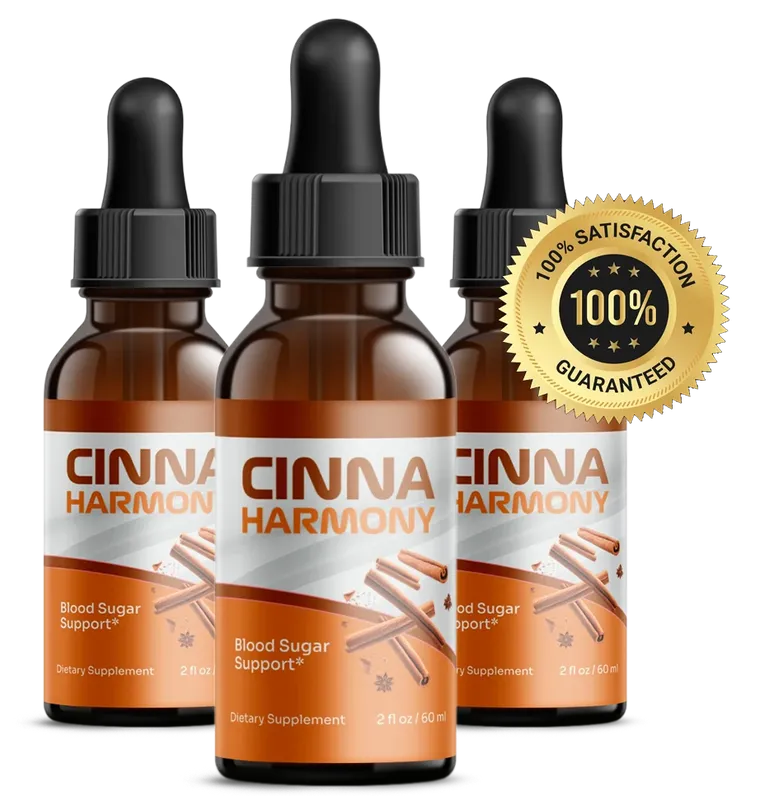
Each 1 ml of Cinna Harmony holds chromium 0.7 mcg (2% DV) and a 200 mg blend of 22 ingredients.
The blend includes gymnema, African mango, green tea, maca, Panax ginseng and guarana. No single blend amount is printed on the label.
Cinna Harmony lists two lines of actives per 1 ml serving. Line one is chromium at 0.7 mcg, and line two is a 200 mg proprietary blend that holds 22 ingredients.
Chromium is the only active with its own amount. Flip a card to see the dose human studies used.
0.7 mcg
as chromium picolinate
What studies used
200-1,000 mcg a day in diabetes trials
0.7 mcg is about 1/300 to 1/1,400 of trial doses, and below the adult adequate intake. (Suksomboon et al., 2014)
Share not listed
Gymnema leaf extract, in the 200 mg blend
What studies used
600 mg a day (300 mg twice daily)
The whole 200 mg blend is smaller than one study dose of gymnema alone. (Zuniga et al., 2017)
Share not listed
Irvingia gabonensis seed extract, in the blend
What studies used
150 mg twice a day of one branded extract
Reviews judged the African mango trials to be of poor quality. (Ngondi et al., 2009)
Share not listed
Camellia sinensis leaf extract, in the blend
What studies used
Weight trials: 141-1,207 mg catechins
Concentrated extracts are a rare, known cause of liver injury. (LiverTox (NIDDK), 2020)
Share not listed
Lepidium meyenii root extract, in the blend
Share not listed
Panax ginseng aerial extract, in the blend
What studies used
About 100 mg to 8 g a day
A small fasting-glucose drop, no change in HbA1c. The label uses aerial parts. (Shishtar et al., 2014)
Share not listed
Paullinia cupana seed extract (a caffeine source), in the blend
What studies used
Caffeine benchmark: up to 400 mg a day for most adults
Guarana adds caffeine; the amount here is not printed. (FDA, 2024)
Share not listed
Monoammonium glycyrrhizinate, in the blend
What studies used
No safe threshold verified
Glycyrrhizin can raise blood pressure and lower potassium in larger amounts. (NCCIH, 2025)
The full panel is on the Cinna Harmony supplement facts page.
No. Despite the name and the cinnamon sticks on the front, the Cinna Harmony Supplement Facts list no cinnamon at all.
Cinnamon and cassia appear nowhere, not even among the other ingredients.
That matters less than it sounds. NCCIH says it is unclear whether cinnamon supplements help diabetes (NCCIH, 2024). Our article on whether there is cinnamon in Cinna Harmony covers the name in more depth.
Each 1 ml of Cinna Harmony gives 0.7 mcg of chromium as chromium picolinate, which is 2% of the Daily Value.
Adults need about 20 to 35 mcg a day, depending on age and sex (NIH ODS, 2022). Diabetes trials used about 200 to 1,000 mcg a day.
So the label amount is about 1/300 to 1/1,400 of trial doses. Pooled trials in people with diabetes saw HbA1c fall about 0.55 points, often at more than 200 mcg (Suksomboon et al., 2014). Other reviewers advise against chromium for blood sugar control (Landman et al., 2014).
The Cinna Harmony blend names 22 ingredients under one 200 mg total. The label does not say how much of each one is inside.
Split evenly, each would get about 9 mg per ml, though the real split is not printed. The table groups the 22 names by type.
| Blend ingredients | Group | What the cited research says |
|---|---|---|
| Gymnema, Panax ginseng (aerial), African mango | Blood sugar and weight research | Small studies at far larger doses (LiverTox (NIDDK), 2024) |
| Guarana, green tea | Caffeine sources | Add caffeine; the amount is not printed (NCCIH, 2025) |
| Coleus forskohlii, capsicum, raspberry ketones, grapefruit | Weight-loss style extracts | Little or no proof of weight change (NIH ODS, n.d.) |
| Maca, eleuthero, astragalus | Roots from traditional use | Limited human data; none proven for blood sugar (NCCIH, 2025) |
| Grape seed extract | Seed extract | No source in our list tested it for blood sugar |
| Monoammonium glycyrrhizinate | Licorice compound | Can raise blood pressure in larger amounts (NCCIH, 2025) |
| L-glutamine, L-tyrosine, L-arginine, beta-alanine, GABA, L-ornithine, L-tryptophan, L-carnitine | Amino acids and related compounds | L-arginine might lower blood pressure and blood sugar (Mayo Clinic, 2026) |
Three Cinna Harmony blend ingredients have human blood sugar studies: gymnema, Panax ginseng and African mango. None was tested in these drops.
In a 12-week trial, 600 mg a day did not change insulin sensitivity (Zuniga et al., 2017).
Across 16 trials, ginseng lowered fasting blood sugar slightly but did not change HbA1c (Shishtar et al., 2014). Cinna Harmony uses the aerial parts, not the root.
One trial gave 150 mg of a branded extract twice a day for 10 weeks (Ngondi et al., 2009). A later review found the trials small and poorly reported (Onakpoya et al., 2013).
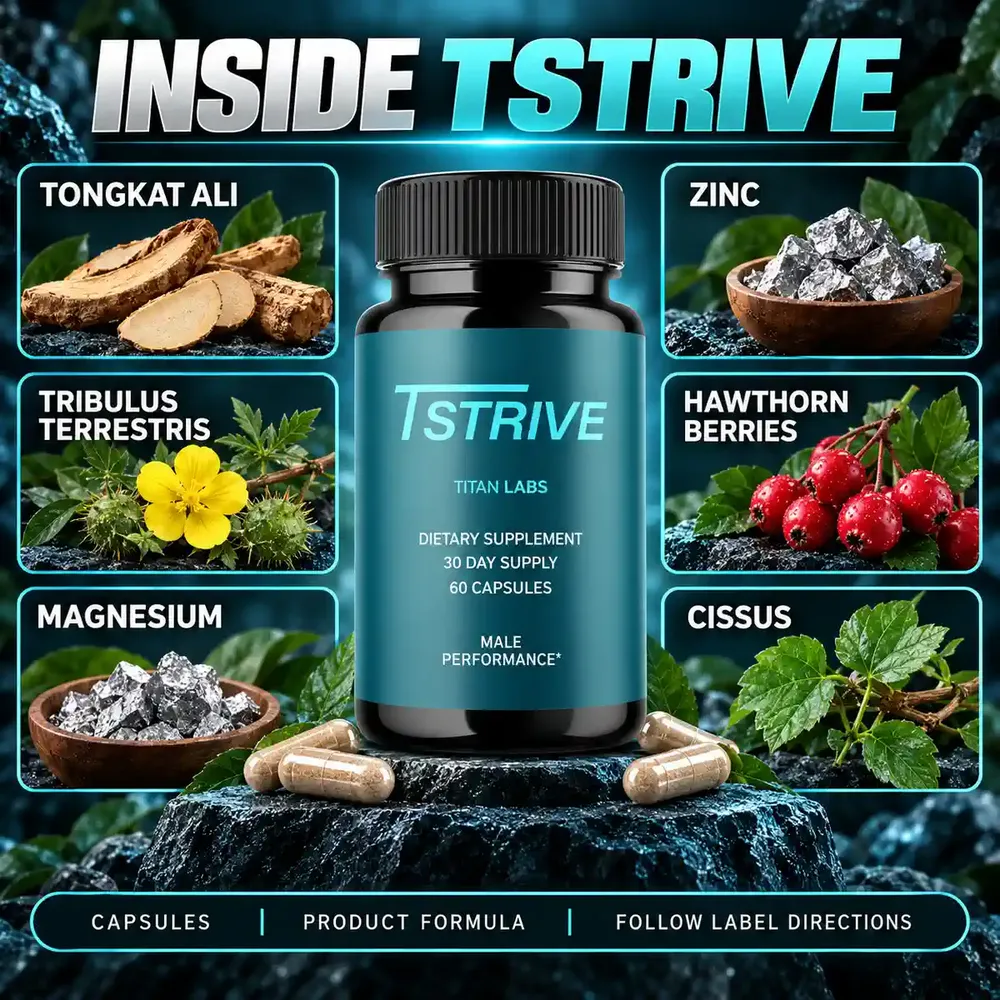
No. The seller graphic shows six tiles, while the Cinna Harmony label has 23 ingredient lines in total.
The other 17 sit unseen in the blend.
Guarana and green tea add caffeine to Cinna Harmony, and monoammonium glycyrrhizinate is a licorice compound. No amount is printed for any of them.
Too much caffeine can cause a fast heartbeat, shakiness and poor sleep (FDA, 2024). Green tea extract is also a rare cause of liver injury (LiverTox (NIDDK), 2020).
Glycyrrhizin from licorice can raise blood pressure and lower potassium in larger amounts (NCCIH, 2025).
Mostly no. Chromium sits far below trial doses, and every herb shares a 200 mg total.
Each step on the log-scale meter is ten times larger. More detail is in our article on gymnema, chromium and African mango study doses.
0.7 mcg per ml (1.4 mcg at 2 ml) is about 1/300 to 1/1,400 of trial doses and below the adult adequate intake. Sources: (Suksomboon et al., 2014) (NIH ODS, 2022)
Gymnema's share is not printed. The whole 200 mg blend is smaller than one study dose. Sources: (Zuniga et al., 2017) (LiverTox (NIDDK), 2024)
Share not printed. Trials used one branded extract and were judged poor quality. Sources: (Ngondi et al., 2009) (Onakpoya et al., 2013)
Share not printed. Gram doses, studied for sexual function rather than blood sugar. Sources: (Shin et al., 2010)
If split evenly, each of the 22 would get about 9 mg per ml. The real split is not printed. Sources: (Ngondi et al., 2009) (Shin et al., 2010)
Cinna Harmony amount dose range used in human studies (log scale)
Nine inactive ingredients make up the liquid: glycerin, water, organic lemon extract, stevia extract 97% (Reb A), xylitol, sodium benzoate, potassium sorbate, citric acid and natural flavors.
No sugar is listed: stevia and xylitol sweeten the drops. Sodium benzoate and potassium sorbate are preservatives.
Possible reactions to each active are on the side effects page, and the intended mechanism is on how Cinna Harmony works.
Questions people type into Google and Bing, answered from the label and the sources on this page.
Each 1 ml lists chromium 0.7 mcg plus a 200 mg blend of 22 ingredients, from maca and gymnema to guarana and eight amino acids and related compounds.
0.7 mcg per 1 ml, as chromium picolinate, which is 2% of the Daily Value.
Yes, some. Guarana and green tea both carry caffeine, but the label prints no amount.
A compound made from licorice root. In larger amounts, licorice can raise blood pressure and lower potassium.
Its share is not printed. One trial used 600 mg a day, three times the whole 200 mg blend.
Mostly weight and metabolic support. Its main trial used 150 mg of one branded extract twice a day, and reviewers rated the evidence poor.
The label does not say. Raspberry ketone is sold for weight loss, with no evidence that it is safe or effective for that.
No sugar is listed. Stevia and xylitol sweeten it, and xylitol is toxic to dogs.
The FDA warning covers grapefruit juice, not extracts. If a medicine of yours has a grapefruit warning, ask your pharmacist first.
The label makes no gluten-free or vegan claim. Ask the order desk if either matters to you.